


Mood & Sleep
Mood & Sleep
Couldn't load pickup availability
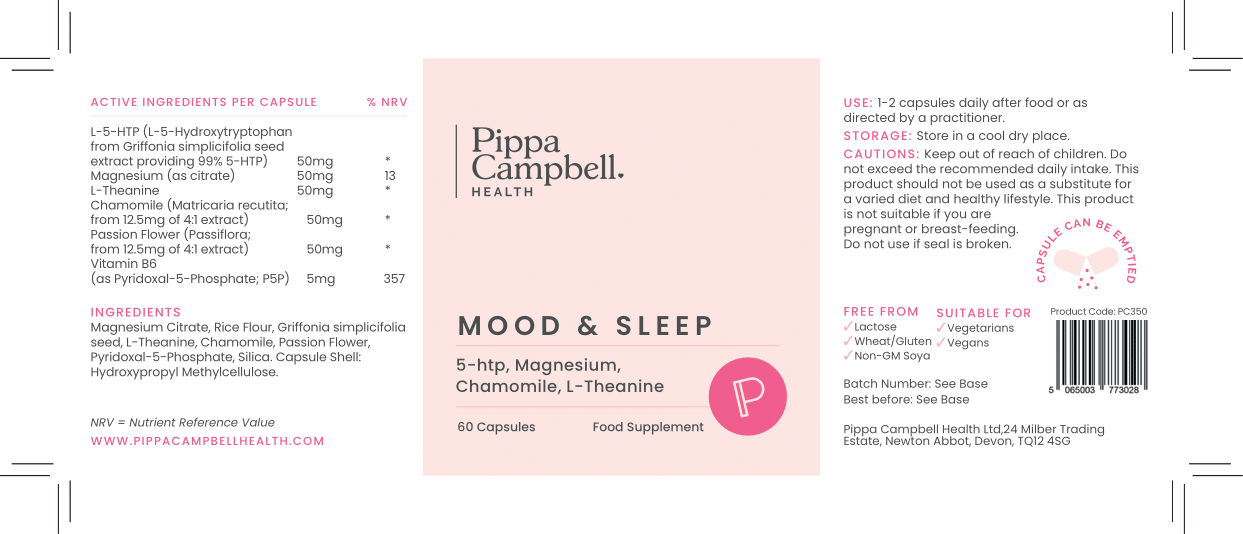
Mood & Sleep combines 5-HTP, a precursor to serotonin and melatonin, with L-theanine, chamomile and passionflower to support the natural processes behind mood and sleep. This combination helps calm an overactive mind, supports deeper, more restful sleep with fewer night-time wakings, and promotes a more balanced mood during the day.
What Mood & Sleep supports:
• Falling Asleep More Easily
• Deeper, More Restful Sleep
• Fewer Night-Time Wakings
• Calm and Relaxation
• Balanced Mood and Emotional Wellbeing
• Mental Clarity and Daytime Energy
How To Use
How To Use
1-2 capsules one hour before bedtime. Can also take 1-2 capsules mid-afternoon.
Dose: Suitable from age 12. Not suitable during pregnancy, breastfeeding or if taking SSRIs or antidepressants. If you are on antidepressants, Chill is the safe alternative for mood and stress support.
Ingredients
Ingredients
5-HTP is the direct building block for serotonin, the chemical that contributes to mood, appetite and sleep. It supports your body's own production rather than replacing it.
Vitamin B6 is essential for the conversion of 5-HTP to serotonin, and serotonin to melatonin. Without adequate B6, this process cannot work effectively regardless of 5-HTP intake.
Magnesium contributes to normal psychological function and supports the calming pathways in the nervous system. Magnesium contributes to the reduction of tiredness and fatigue (approved health claim).
What nutritional support is available for sleep during perimenopause?
What nutritional support is available for sleep during perimenopause?
The most effective nutritional approach supports the body's own production of melatonin rather than supplementing it directly. My Mood and Sleep provides 5-HTP, Vitamin B6 and magnesium, which together support serotonin and melatonin production naturally. My Magnesium Complex taken alongside it further supports restful sleep.
Why might sleep change during perimenopause?
Why might sleep change during perimenopause?
Changes in sleep patterns are one of the most common experiences during perimenopause, often connected to shifts in cortisol, progesterone, and in serotonin and melatonin production. My Mood and Sleep and Chill together address all three of these nutritional drivers.
Share

Started over a month ago and found it helps with getting off to sleep
Supports my sleep & calms my mind
I find it really hard to relax on an evening and I could get to sleep but not stay asleep but since taking mood and sleep i feel a lot more relaxed and I’m sleeping for much longer through the night. I’d highly recommend
I’ve been having trouble sleeping and going through perimenopause. This has definitely helped me fall back asleep.
Fantastic product and works immediately! I have been trying to cut down on the glass of wine or snacks in the evening (which chill me out or give me that dopamine boost after a long day -but obviously not healthy!)
Instead have been having 2 capsules ~30mins before I sleep and I instantly feel relaxed and happy. The 5HTP does wonders, you genuinely feel lighter, calm and it feels like a dopamine boost!
GOODBYE wine hello supplements! Love this, will be buying again.
I was recommended Pippa Campbell from a MIC star we all know and love - and I will definitely be recommending to my friends now too!